
Officials dispatch prosecutors to vote-buying hotspots
Taiwanese voters are going to the polls this Saturday. Taiwan's high prosecutor office on Wednesday said it has dispatched prosecutors to police stations in vote-buying hotspots to immediately handle potential bribery cases.
The office says it has recently investigated numerous cases of vote-buying. Official figures show that as of Tuesday, authorities have investigated 304 cases of vote-buying. Prosecutors say the cases show that as campaigns intensify, many candidates' camps are choosing to exchange cash for voters' support.
The prosecutor's office says it has dispatched attorneys to vote-buying hotspots to combat bribery. It says local prosecutors should identify high-risk targets by referencing intelligence and financial flows and quickly investigate them to ensure a clean election.
Meanwhile, the Interior Ministry says it has already arrested a suspect accused of assaulting a candidate in Taipei. Interior Minister Hsu Kuo-yung (徐國勇) says violence should not be allowed to disrupt the election and has asked police to maintain the security of the vote.
News Source:RTI
Editor:Itamar Waksman

Election Commission says political clothing not allowed when voting
The Central Election Commission says eligible voters should refrain from wearing political clothing and adhere to pandemic prevention measures when voting. The commission is referring to the local election that will take place on Saturday.
The commision says there can be no political rallying on the day of the election. Eligible voters should not wear merchandise, carry flags or accessories affiliated with a political party or candidate.
Meanwhile, the commission says voters should follow COVID-19 regulations and wear a mask at the polls. It reminds voters masks should also not contain political slogans, symbols, or any specific candidate endorsement.
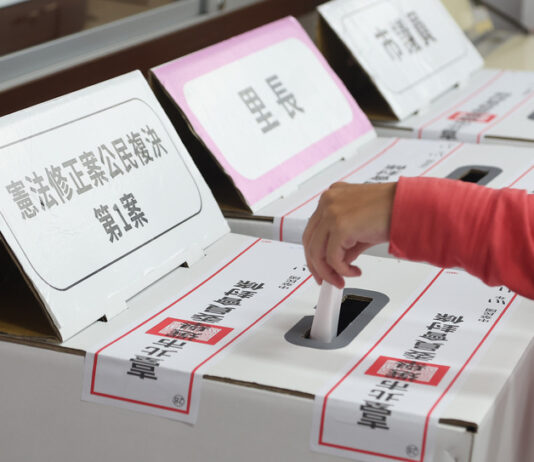
The commission says voters are also not allowed to wear any items related to the referendum, including stickers, symbols, or other merchandise. On Saturday, voters will also have to vote on a referendum on lowering the voting age from 20 to 18.
The commission says voters should only need to bring their national ID, stamp, and voting notice to the voting booths.
News Source:RTI
Editor:Brendan Wong

VIDEO: Mayoral candidate hopes to drum up votes through phone calls
Taiwan is holding its local elections in a week's time on Nov. 26. Candidates are scrambling to get more support, even if it means calling people on the phone to tell them to go to the polls on the big day.
Video script:
Hsinchu City's KMT mayoral candidate Lin Ken-jeng (林耕仁) is on the street campaigning alongside his wife from a campaign vehicle. Lin is calling on people to vote if they want to see changes in the city, regardless of which party they support.
The DPP candidate for Hsinchu's mayor, Shen Hui-hung (沈慧虹) is also campaigning hard. She demonstrates how to call people to encourage them to vote. During her first call she asked the person if they knew what's happening on Nov. 26. But before the woman could answer, the screen froze. Shen was able to soften the embarrassment by telling the audience they can expect a lot of phone calls and that there will be heavy traffic on the social app LINE on the day.
Shen says many voters are very supportive. She says some people even gave her hand-written notes with encouragement. However, she also took the opportunity to criticize another candidate from the TPP party, Kao Hung-an (高虹安), who has recently been accused of corruption.
Time for campaigning is running out, and candidates are charging forward, hoping to win more votes.
News Source:RTI
Editor:Shirley Lin

VIDEO: Taipei mayor candidates display family support ahead of election
Taiwan's midterm elections are quickly approaching on November 26. Tensions are running high as candidates scramble to rally up more support, leaving some people wondering whether candidates are showing off their family members to gain more empathy and votes.
Video script:
Taipei mayor candidate Chiang Wan-an (蔣萬安) moves around a traditional market, greeting vendors and encouraging them to support him in the upcoming election. Chiang's wife also appeared at the market, rallying alongside her husband's supporters.
Some media sources are questioning whether Chiang intentionally invited his pregnant wife to the rally, believing that "playing the family card" could help attract more voters. Chiang declined to comment on these speculations.
Chiang isn't the only Taipei mayor candidate making public appearances with their family members. Chen Shih-chung (陳時中) went onstage with his wife at a concert on Sunday, but he says this was not a ploy to win people's empathy.
Candidate Huang Shan-shan (黃珊珊) says many of her family members are military personnel, so they're not able to join her during her campaign due to work obligations. But she says she still feels strong familial support from Taipei residents themselves.
The elections are less than two weeks away, which could mean seeing more new campaigning strategies to win over voters during this crucial period.
News Source:RTI
Editor:Emma Benack

VIDEO: City delays mayor vote after candidate death
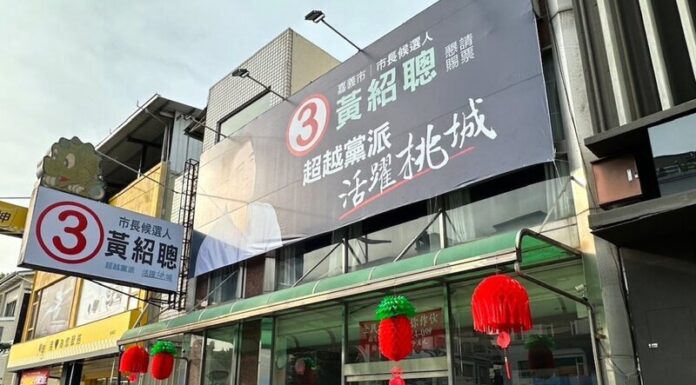
After a candidate for Chiayi City mayor died this week, election authorities announced the mayorship election would have to be delayed. That's left many worried about the effect on voting.
On Tuesday, Chiayi City Mayor candidate Huang Shao-tsung (黃紹聰) suddenly passed away. Authorities say according to Taiwanese law, the mayorship election must be delayed. Now many are worried about how the delay may affect voting.
Authorities plan to hold the votes for mayor and city councilors separately. Some say that may lower turnout.
Many candidates also say dividing the vote will lower youth turnout. That's because young people with household registration in Chiayi City will have to return home to vote.
One resident says organizing two races is a waste of money. Another says it may lower turnout by 40%.
Five other candidates in this year's elections have died, but those other races have been able to adjust in time to maintain the November 26 voting day.
Chiayi City election authorities have to register candidates again before setting a new election date. Voters and candidates alike are hoping this can be completed in time to avoid splitting the ballot.
News Source:RTI
Editor:Itamar Waksman
President Tsai: Taiwan will not be shaken by threats from China
Taiwan will not be shaken by threats from China. That was the word from President Tsai Ing-wen (蔡英文) as she spoke at the opening of the 11th assembly of the World Movement for Democracy in Taipei on Tuesday. The assembly is being held from October 25 through the 27.
The assembly aims to strengthen solidarity in building democracy around the world. Over 300 democracy activists, politicians, journalists and lawmakers from over 70 countries are participating in the forum. That includes 2021 Nobel Peace Prize winner Maria Ressa.
Tsai says Taiwan has been affected by the war in Ukraine. She says threats from China have increased following US House Speaker Nancy Pelosi's visit in August. Tsai says Taiwan's democracy will not be shaken as the country cherishes its democratic system. Taiwan's resilient system is built on its civil society which regularly dialogues with the government.
President Tsai also says the world needs to understand how authoritarian systems operate. She says democratic alliances also must be strengthened to keep democracies resilient. Tsai says the assembly is a great opportunity to unite resources to strengthen democracy around the world.
News Source:RTI
Editor:Natalie Tso

Poll: 46% favor lowering voting age to 18 in Taiwan
A recent poll found that 46% of Taiwanese favor lowering the voting age from 20 to 18 years old. The poll was taken by the NGO Forward Alliance this month.
The upcoming November 26 local elections will also include a referendum on changing the constitution to lower the voting age. Support for the move has grown in the last two months but is still under the 50% threshold needed to pass. Taiwan is the only major democracy in the world where 18 year olds can't vote.
Forward Alliance Director Enoch Wu (吳怡農) says that over half of centrist voters are unaware of the upcoming voting age referendum and another 16% are undecided on the issue.
Taiwan Youth Association for Democracy President Chang Yu-meng ( 張育萌)
says many of Taiwan's laws are unreasonable. For example, 18 year olds in Taiwan can get a driver's license but they can't buy a car. He says Taiwan's laws need to be amended to reflect the rights and responsibilities young people should have.
On March 25, the legislature approved lowering the voting age to 18, but the constitutional amendment needs to be submitted to a referendum. To pass, 9.65 million voters need to approve it.
News Source:RTI
Editor:Natalie Tso
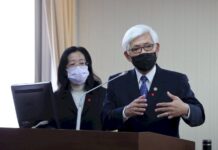
Voting rights of COVID-19 patients still under discussion
Officials are still discussing whether quarantine rules will change for people who have COVID-19 so they can leave the home to vote in local elections. Taiwan will be holding elections for new city mayors, county magistrates, city councilpersons and other local offices on November 26.
Taiwan has been seeing tens of thousands of new COVID-19 cases reported every day. On Sunday alone, another 35,322 new cases were confirmed.
Everyone with Covid-19 is supposed to isolate at home for seven days and then go under self-health management for another seven days. Patients are not allowed to leave the home during the seven-day quarantine period or they could receive a fine of up to NT$1 million.
On Monday, Central Election Commission chairman Lee Chin-yung said the issue of whether COVID-19 patients will be allowed to go out to vote is still being discussed with the Central Epidemic Command Center.
Lawmakers are pressing for a decision to be announced at least one week before the election to ensure that all voters can cast a ballot next month.
News Source:RTI
Editor:Naomi Hellman
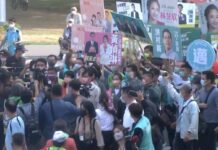
VIDEO: Local election candidates draw ballot numbers
Local election season is in full swing in Taiwan. On November 26, voters will decide their next mayors, councilors, as well as village and borough chiefs. One of the necessary steps before the election is arranging the candidates' names on the ballot. In Taiwan, this is done through a random draw.
Opposition KMT candidate for Kaohsiung mayor, Ko Chih-en (柯志恩), arrives at the scene surrounded by her entourage. The incumbent Mayor Chen Chi-mai (陳其邁) arrives shortly after. They exchange polite greetings, because there's nothing they can do to influence the outcome of what's about to happen — the candidates are about to draw their future numbers on the ballot.
Ko ended up with number three, while Chen will run as the fourth name on the list. They concluded the event by wishing each other all the best.
In Taichung, DPP mayoral candidate Tsai Chi-Chang (蔡其昌) arrives at the designated spot at 8:30 in the morning, also surrounded by supporters. He gets number two, despite some confusion with the call-outs. His rival in the election, the incumbent Mayor Lu Shiow-yen (盧秀燕) couldn't make it due to her schedule, so her campaign manager steps in. She seems happy with the result — number three.
Similar scenes took place in other districts, like Taoyuan and Tainan. With the elections almost a month away, and with final formalities squared away, the candidates can now focus on winning voters' trust.
Tomasz Koper, RTI News
News Source:RTI
Editor:Tomasz Koper
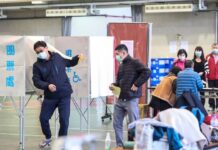
Quarantined persons and youth under 20 unable to vote in elections
People in quarantine and those under the age of twenty will not be allowed to vote in this year's elections. Elections head Lee Chin-yung (李進勇) spoke with lawmakers on Thursday to address concerns surrounding these rules.
Apart from voting for local officials, on November 26 Taiwanese citizens will also vote to approve or reject a new constitutional amendment to lower the voting age to 18.
Taiwan's referendum law allows those 18 years and older to vote in plebiscites. That's caused many people to question if 18 and 19 year olds can vote for this year's constitutional amendment. But Lee says voting eligibility is different for referendums and amending the constitution. Taiwan is the only democratic nation in the world that does not allow 18-year-olds to vote.
Lawmakers also asked about controversy surrounding how those quarantined with COVID-19 won't be able to vote in the elections. This could potentially prevent as many as 300,000 people from voting. Lee says this is not unconstitutional because people must follow national pandemic protocol.
Other countries like South Korea have devised voting systems that allow people in quarantine to vote at designated locations. But Lee says Taiwan does not have this kind of system in place.
Lawmakers say there are concerns that people with COVID-19 will not report their cases so they can still vote. Lee says there is no way for the government to prevent this, but he urges everyone to consider the health of the people around them.
News Source:RTI
Editor:Emma Benack